
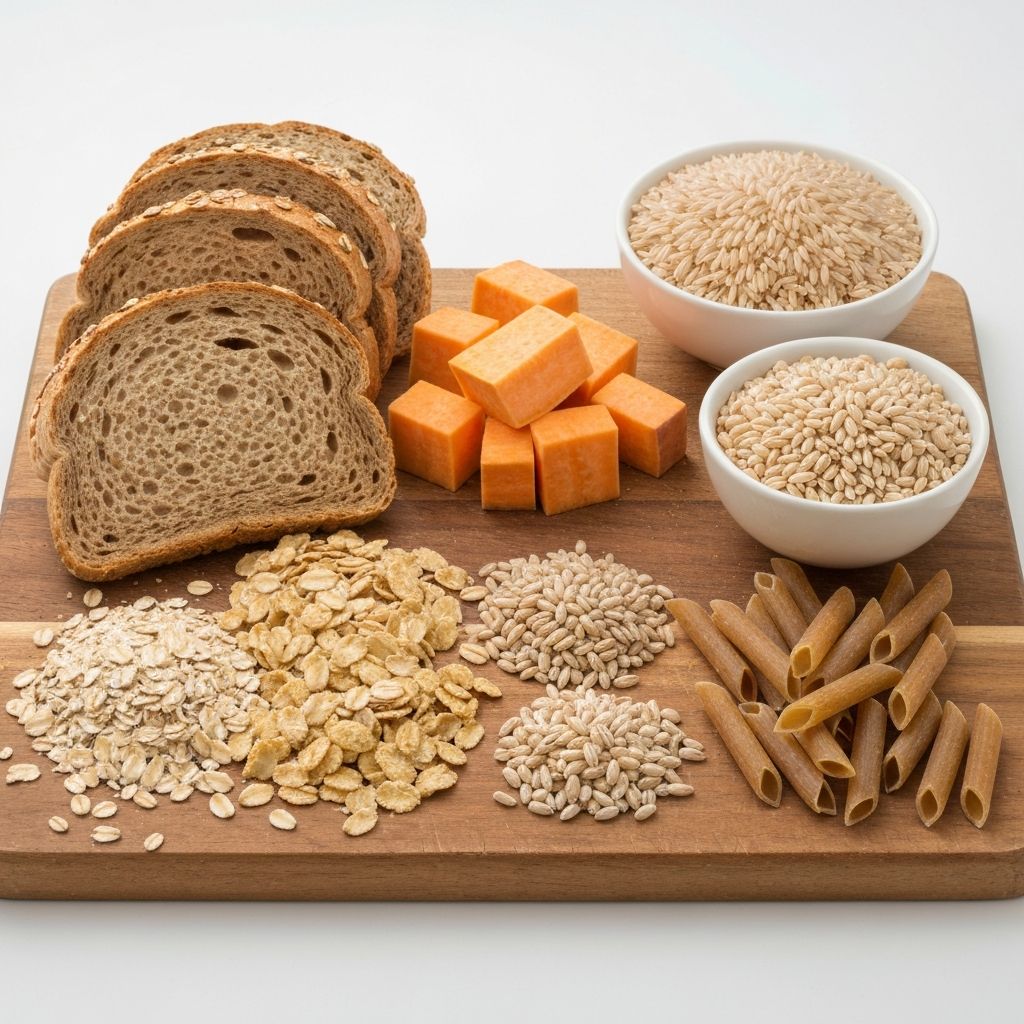
Carbohydrates: Forms and Energy Dynamics
Structural overview of carbohydrate types and their roles in energy metabolism
Carbohydrate Chemistry and Classification
Carbohydrates are organic molecules composed of carbon, hydrogen, and oxygen, classified by molecular structure into monosaccharides (simple sugars), disaccharides (double sugars), and polysaccharides (complex chains). This structural diversity profoundly influences digestive rate, blood sugar response, and metabolic availability.
Monosaccharides are single sugar molecules: glucose, fructose, and galactose. Glucose is the primary fuel for cellular energy and the brain's preferred fuel source. Disaccharides include sucrose (table sugar), lactose (milk sugar), and maltose. Polysaccharides include starch (the storage form of carbohydrates in plants) and glycogen (the storage form in animals).
Simple versus Complex Carbohydrates
Simple carbohydrates digest and absorb rapidly, causing quick rises in blood glucose and insulin. They provide immediate energy but often lack accompanying micronutrients. Common sources include refined sugars, white bread, and sweetened beverages.
Complex carbohydrates are long chains of glucose molecules, digesting more slowly and providing sustained energy. Whole grains, legumes, and vegetables contain complex carbohydrates alongside fibre and micronutrients, creating more gradual blood sugar responses.
The fibre content in whole foods moderates carbohydrate digestion rate. For example, whole grain bread (with fibre intact) produces a different blood glucose response than white bread (fibre removed) despite identical starch content.
Blood Glucose Dynamics
When carbohydrates are consumed, digestion breaks them into glucose, which enters the bloodstream. This triggers insulin secretion from the pancreas. Insulin moves glucose from the bloodstream into cells for energy use or storage as glycogen (in muscles and liver) or fat (when glycogen stores are full).
Glycaemic index (GI) is a measure of how quickly carbohydrate-containing foods raise blood glucose. Low-GI foods produce slower, smaller glucose spikes; high-GI foods produce rapid spikes. However, GI varies based on food ripeness, cooking method, and meal composition. A food's glycaemic load (GI adjusted for portion size) may be more practically relevant.
Individual glucose responses vary based on insulin sensitivity, gut bacteria, physical activity, stress, sleep, and other metabolic factors. One person's blood glucose response to a food differs from another's, highlighting the importance of individual awareness rather than universal rules.
Energy Storage and Utilisation
Glucose serves multiple roles: it is the primary fuel for the brain (requiring approximately 120 grams daily), red blood cells, and muscles during activity. When energy needs exceed current carbohydrate intake, the body mobilises stored glycogen. Once glycogen is depleted, the body can produce glucose through gluconeogenesis—synthesising glucose from non-carbohydrate sources such as amino acids and fats.
During rest and low-intensity activity, the body primarily uses fat for energy. During high-intensity activity, carbohydrate utilisation increases. This is why carbohydrate availability becomes important for athletes engaged in intense or prolonged activity.
Carbohydrate needs vary substantially based on activity level, fitness goals, and metabolic adaptation. Sedentary individuals require less carbohydrate than athletes; endurance athletes may require carbohydrate-loading strategies before competition.
Carbohydrate Food Sources
Whole grains: Brown rice, oats, barley, quinoa, and whole wheat provide complex carbohydrates alongside fibre, B vitamins, and minerals. Processing (such as refining white rice or white flour) removes fibre and micronutrients.
Vegetables: Non-starchy vegetables (leafy greens, broccoli, peppers) are low in carbohydrates but high in fibre and micronutrients. Starchy vegetables (potatoes, corn, peas) contain more carbohydrates but still provide nutrients and satiety.
Fruits: Natural sugars combined with fibre, water, and micronutrients. Different fruits vary in sugar concentration and fibre content—berries are lower in sugar per serving, while dried fruits are more concentrated in sugars.
Legumes: Beans, lentils, and peas combine complex carbohydrates with protein and fibre, creating slower blood glucose responses and sustained energy.
Refined carbohydrates: White bread, white rice, sugary beverages, and desserts provide carbohydrates with minimal fibre or micronutrient content. These digest rapidly and contribute to quick blood glucose spikes.
Carbohydrate and Satiety
Carbohydrate's influence on satiety is complex. Refined carbohydrates may not promote sustained fullness, while fibre-rich carbohydrates (whole grains, vegetables, legumes) enhance satiety through volume, slower digestion, and increased viscosity in the digestive tract.
Carbohydrate composition matters alongside quantity. A meal with whole grains, vegetables, and protein produces different satiety signals than one with equivalent calories from simple carbohydrates alone.
Individual responses vary. Some people feel more satiated with carbohydrate-rich meals; others require more protein or fat to achieve sustained fullness. Experimentation and attention to personal satiety cues is more useful than universal recommendations.
This article provides educational information about carbohydrate structure and metabolism. It is not personalised nutrition advice. Individual carbohydrate needs, tolerance, and optimal sources vary based on health status, activity level, glucose metabolism, and personal preference. For specific guidance regarding carbohydrate intake, especially in the context of diabetes, metabolic conditions, or athletic training, consultation with a healthcare professional or registered dietitian is recommended.